Saturday, June 15, 2013

The Shroud of Turin: 3.1 The Bible and the Shroud: Introduction

This is "3.1. Introduction" of "3. The Bible and the Shroud," being part 19 of my series, "The Shroud of Turin." The previous post in this series was part 18, "3. The Bible and the Shroud." See part 1, the main Contents page, for more information about this series.


THE SHROUD OF TURIN
3. THE BIBLE AND THE SHROUD
3.1 INTRODUCTION
© Stephen E. Jones

The Shroud must be consistent with the Bible If the Shroud of Turin is the burial shroud of Jesus Christ, then it must be consistent with what the Bible says about Him, and particularly about His suffering, crucifixion, death, burial and resurrection:

"If the Shroud is the actual burial garment of Jesus, then it should be consistent with the New Testament texts. This condition must be satisfied before anyone can identify the cloth as Jesus' burial garment."[1].

[Above: Depiction of the most likely position in which Jesus died, and then was fixed by rigor mortis, based on the blood stains on the Shroud of Turin[2]. Note the injuries on the Shroud which are consistent with the injuries that the New Testament records of Jesus.]

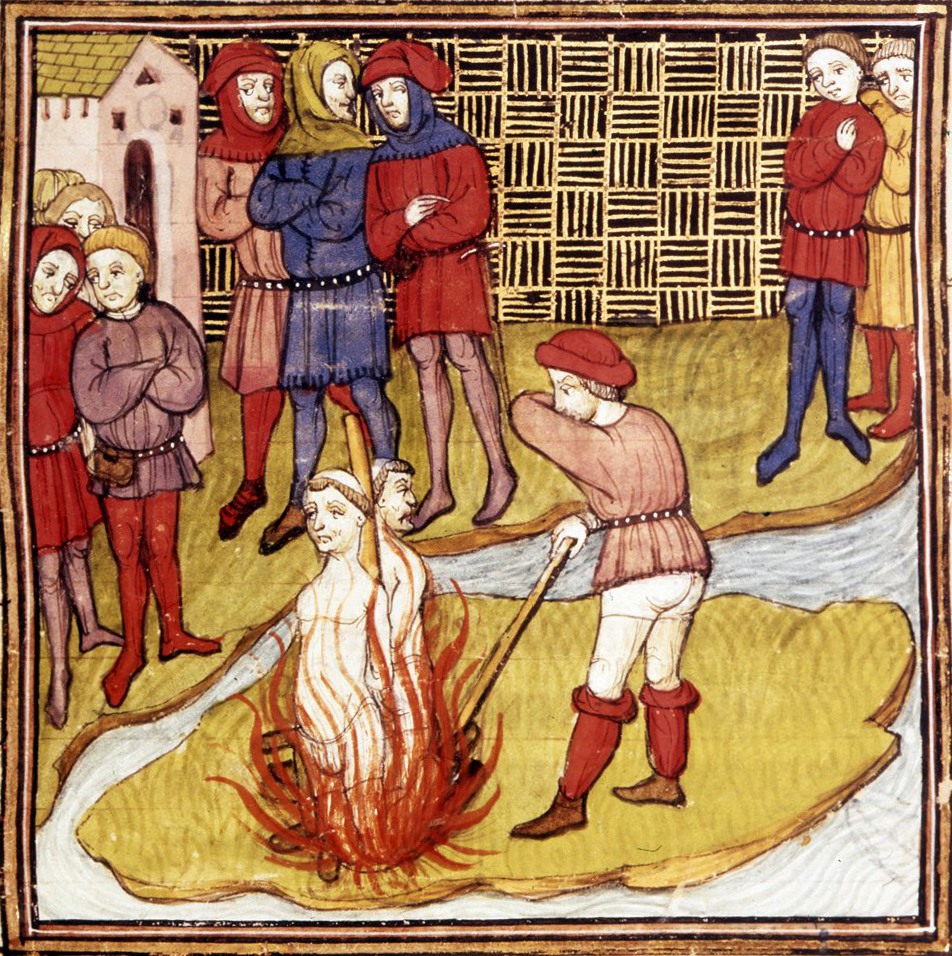
Because, as Stevenson and Habermas' second sentence above implies, if the image on the Shroud was not consistent with the Bible says about Jesus, and particularly about His suffering, crucifixion, death, burial and resurrection, then there would be no reason to believe the Shroud was "Jesus' burial garment"[3]. For example, if the Gospels said nothing about Jesus having been scourged with a Roman flagrum, crowned with thorns and speared in the side, that would be sufficient reason to believe that the Shroud imprint is that of another crucifixion victim, as proposed by the theory that the man on the Shroud is that of "a Crusader crucified by the Saracens," or that he is "Jacques de Molay the last Grand Master of the Knights Templar"[4].

The Shroud is consistent with the Bible There is no injury sustained by the man on the Shroud that does not correspond to the injuries to Christ described or implied in the Gospels[5]. Some of the parallels between the Gospel evidence and the Shroud evidence are summarised below in table form[6]:

Gospel evidenceVersesShroud evidence
Jesus was scourged.Mt 27:26; Mk 15:15; Jn 19:1The body is covered with the wounds of a severe scourging.
Jesus was struck blows to the face.Mt 27:30; Mk 15:19; Lk 22:63; Jn 19:3There is a severe swelling below the right eye and other face wounds.
Jesus was crowned with thorns.Mt 27:29; Mk 15:17; Jn 19:2Bleeding from the scalp indicates that a `cap' of thorns was thrust upon the head.
Jesus was made to carry a heavy crossbeam.Jn 19:17Scourge wounds on the shoulders are blurred, as if by the chafing of a heavy burden.
Jesus' cross had to be carried for him, suggesting he fell under its weight.Mt 27:32; Mk 15:21; Lk 23:26The knees are severely damaged, as if from repeated falls.
Jesus was crucified by nails in His hands and feet.Jn 20:25-27; Col 2:14There are blood flows as from nail wounds in the wrists and at the feet.
Jesus' legs were not broken, but a spear was thrust into his side as a check that he was dead.Jn 19:31-37The legs are not broken, and there is a large wound in the right side.

The Bible does not exclude the man on the Shroud being Jesus Nothing in the Bible rules out the man on the Shroud being Jesus[7]. There is no detail in the Gospels' account of the suffering, crucifixion, death and burial of Jesus that contradicts the witness of the Shroud[8].

Shroud sceptics concede the image on the Shroud matches the Gospels' description of Jesus As we saw in part 5, "1.3 The central dilemma of the Shroud," even leading Shroud sceptics concede that the image of the man on the Shroud matches the Gospels' description of Jesus' suffering, crucifixion and death. For example, the late Fr. Herbert Thurston (1856-1939), a leading early 20th century Roman Catholic Shroud sceptic, admitted that:

"As to the identity of the body whose image is seen on the Shroud, no question is possible. The five wounds, the cruel flagellation, the punctures encircling the head ... If this is not the impression of the Body of Christ, it was designed as the counterfeit of that impression. In no other personage since the world began could these details be verified."[9]

Conclusion "The comparison of the New Testament and the Shroud image lines up at every point"[10]. As can be seen above in this introductory overview, the Shroud of Turin is fully consistent with the Bible's description of the suffering, crucifixion and death of Jesus Christ. In succeeding posts in this section, "3. The Bible and the Shroud," we will see the above in more detail, as well as that the Shroud is fully consistent with the burial and resurrection of Jesus.

NOTES
1. Stevenson, K.E. & Habermas, G.R., 1981, "Verdict on the Shroud: Evidence for the Death and Resurrection of Jesus Christ," Servant Books: Ann Arbor MI, p.43. [return]
2. "World Mysteries - Strange Artifacts - Shroud of Turin." [return]
3. Stevenson & Habermas, 1981, p.43. [return]
4. Wilson, I., 1998, "The Blood and the Shroud: New Evidence that the World's Most Sacred Relic is Real," Simon & Schuster: New York NY, 1998, p.10. [return]
5. Ruffin, C.B., 1999, "The Shroud of Turin: The Most Up-To-Date Analysis of All the Facts Regarding the Church's Controversial Relic," Our Sunday Visitor: Huntington IN, p.49. [return]
6. Wilson, I., 1979, "The Shroud of Turin: The Burial Cloth of Jesus?," Image Books: New York NY, Revised edition, pp.51-52. [return]
7. Stevenson & Habermas, 1981, p.53. [return]
8. Ruffin, 1999, p.49. [return]
9. Thurston, H., 1903, "The Holy Shroud and the Verdict of History," The Month, CI, p.19, in Wilson, 1979, p.53 (my emphasis). [return]
10. Stevenson & Habermas, 1981, p.45. [return]


To be continued in part 20, "3.2. The man on the Shroud."

Last updated: 18 June, 2013.

Sunday, June 9, 2013

The Shroud of Turin: 3. The Bible and the Shroud

Here at last is a new section, "3. The Bible and the Shroud," which is part 18 of my series, "The Shroud of Turin." It is a sub-contents page from which links will be made to separate topics pages below as I add them. Some of the topics may be combined into one page. The previous post in this series was part 17, "2.6. The other marks (6): Writing ."

[Right (click to enlarge): The Shroud of Turin, with major bloodstains (outlined in red), which are consistent with the Gospels' accounts of the crucifixion of Jesus Christ: Shroud Scope: Durante 2002: Major bloodstains]

See part 1, the main Contents page, for more information about this series.


THE SHROUD OF TURIN
3. THE BIBLE AND THE SHROUD
© Stephen E. Jones

  1. Introduction
  2. The man on the Shroud
  3. He was scourged
  4. He was beaten about the head
  5. He was crowned with thorns
  6. He carried his cross
  7. He fell
  8. He was nailed to a cross
  9. He died on the cross
  10. His face was covered with a small cloth
  11. His legs were not broken
  12. He was speared in the side
  13. He was buried in tomb
  14. His body was washed
  15. His body was anointed with spices
  16. He was enfolded in a linen shroud
  17. His body did not decompose
  18. His body was resurrected!
  19. Objections
  20. Alternatives
  21. Conclusion


Continued in part 19, "3.1. The Bible and the Shroud: Introduction."

Last updated: 14 June, 2013.

Tuesday, June 4, 2013

The Shroud of Turin: 2.6. The other marks (6): Writing

Here is "The other marks (6): Writing," which is part 17 of my series, "The Shroud of Turin." The previous post in this series was part 16, "2.6. The other marks (5): Coins over eyes ." See the Contents page for more information about this series.


THE SHROUD OF TURIN
2. WHAT IS THE SHROUD OF TURIN?
2.6. THE OTHER MARKS (6): WRITING
© Stephen E. Jones

Introduction As previously explained, by "other marks" is meant those significant marks on the Shroud of Turin which are not wounds (see "2.4. The wounds") or bloodstains (see "2.5. The Bloodstains"). And the order in which these "other marks" are presented is from the most to the least obvious, which is not necessarily from the most to the least important. This is the last post on "the other marks".

Writing on the Shroud? That I have included a page on the topic of "writing on the Shroud" should not be taken to mean that I am claiming that there is any writing on the Shroud (apart from the inscriptions on the coins over the Shroud man's eyes - see part 16, "Coins over eyes"). Rather, I am covering this topic for completeness of my "Other marks" section.

[Above: Illustration of various writings claimed to be on the Shroud[1]. Being over a photographic negative, the actual claimed would be on the other side of the face. The source is probably from the book, "La sindone di Gesù Nazareno" (2009), by Barbara Frale (see below), but there is a smaller monochrome version of it in Guerrera, 2001, p.114S]

Pietro Ugolotti In 1978 Pietro Ugolotti, a pharmacist and amateur Shroud researcher, was examining a 1969 photograph of the Shroud taken by Giovanni Battista Judica-Cordiglia[2] and he noticed what he thought was writing on the face of the man on the Shroud[3].

[Above: Right eyebrow area of the man on the Shroud (to the right of the `reversed 3' bloodstain, showing square shapes which presumably are the claimed Hebrew letters[4]. But see Enrie 1931 negative below which suggests these square shapes are merely a flaw in the linen weave.]

[Above: Enrie 1931 negative of the right eyebrow area of the man on the Shroud (to the left of the `reverse 3' bloodstain because this is a laterally inverted negative) and extending off the man's face. Note that the claimed Hebrew characters appear to be part of a flaw in the linen weave which continues off the man's face[5].]

Aldo Marastoni Ugolotti then contacted Aldo Marastoni, a philologist at the Catholic University of Milan, who examined the photographs and claimed to have discovered inscriptions written in Hebrew, Greek and Latin[6]. Marastoni claimed there were at least three Hebrew letters above the right eyebrow: ת (tau), ו (vaw), which may be a י (yod), and צ (tsade)[7]. The meaning of these letters is unclear but Marastoni thought they might be the end of a Hebrew or Aramaic phrase, because the letters are followed by what may be a punctuation mark, or it may be a fourth letter, ל (lamed)[8]. In the centre of the forehead Marastoni claimed there was a double impression of fragments of a word in Latin, the letters "IB" and "IBER" with the final "R" uncertain[9]. Marastoni theorised this could have been part of the name of the Roman Emperor, Tiberius Caesar[10] who reigned from AD 14-37[11] and so was the Emperor under whose ultimate authority Jesus was crucified. On the left side of the face (right side on a photographic negative), from the bottom upwards, Marastoni claimed there were Latin letters "INN ECE, characteristic of the first century AD, which he theorised was part of "IN NECEM" ("to death")[12]. This same phrase was supposedly repeated in reverse horizontally under the chin and also from the top down on the left of the face[13]. On the left side of the face next to "INNECE" the capital letters "S N AZARE" are claimed to be there, with the "S" being the ending part of a word, presumably being part of "Jesus Nazarenus"[14]. To explain his claimed pattern of letters, repeating and framing the man's face, Marastoni proposed that a hood was placed over the condemned man's head, which was made of a permeable material and the death sentence was inscribed on it[15]. The writing was then transferred onto the man's skin by his sweat[16]. Marastoni also proposed that a type of fork in the shape of a "U" was placed under the man's chin and attached to the crossbeam[17]. See below for problems of Ugolotti's and Marastoni's theory.

[Above: Face of the man on the Shroud on which the letters "INN ECE" (red and yellow borders); "IB" "IBER" (blue border); and "S N AZARE" (green border) are claimed by Marastoni to be[18]. But on the Enrie 1931 negative below, these areas seem to be merely repeating patterns in the linen weave.]

[Above: Enrie 1931 negative showing that the claimed Latin words framing the face of the man on the Shroud[19], are merely repeating patterns in the linen weave (see also below).]

[Above: Enrie 1931 negative photograph[20] showing that the claimed letters down the left(right in this negative) side of the man's face (red border) continue down off the face and also are repeated off the face to the side (blue border).]

Problems of Ugolotti & Marastoni's theory Problems of Ugolotti & Marastoni's theory include, Judica-Cordiglia's 1969 photographs were a small size (6 x 12 cm), which means there is a loss of detail as the photograph is enlarged[21]. There is no historical support for the custom of writing on funeral shrouds in the first century[23]. To the Romans Jesus was just another common Jewish criminal and there would be no reason for them to record under which emperor he had been executed[22]. Even if some of the inscriptions were confirmed to be authentic they might have been made in a different time period to that of the formation of the body image[24]. As for Marastoni's hood and fork theories, there is no archaeological support for those customs[25]. And if the man is Jesus, which Marastoni maintains because of the claimed words "S N AZARE" ("Jesus of Nazareth"), then there is no mention of a hood in the Gospels[26]. Moreover the Gospels record that Jesus spoke from the cross and looked at those around Him (Lk 23:39-43; Jn 19:25-27), therefore, His head cannot have been covered[27]. And the gospel of John records that when Jesus died He bowed His head (Jn 19:30), which would have been impossible if His head were held in position by a fork attached to the cross[28]. And as can be seen above, the claimed writing framing the man's face continues off the face and therefore is merely patterns in the linen weave.

Prof. Pierluigi Baima Bollone reported that his colleague, Prof. Nello Balossino, claims to have found by computer processing of an Enrie 1931 photograph some of these letters[29], and that even some traces of them seem to be visible by direct examination of the cloth[30]. But Balossino found no trace of them were visible on colour and infra-red photographs taken in 1978 and 1997, nor on those taken by Giancarlo Durante in 1997[31]. And Prof. Baima Bollone himself, even though he would presumably have examined all of his colleague Balossino's claimed writing on the Shroud, states:

"Personally I have not yet been able to identify, on all the photographs of the Shroud that I have been able to examine, signs with similar characteristics in the positions indicated. Moreover I am completely unable to understand the mechanism of impression of these graphic traces"[32].

[Above: Crossed lines above the right knee (left in negative). Durantee 2002 positive[33] (left) and Enrie 1931 negative[34](right). As can be seen, there are faint regular shapes which may be writing, more clearly visible on the Durante positive. But some of those regular shapes are repeated off the knee, so they cannot be the writing.]

Writing above the right knee However, Baima Bollone does claim there are ink letters around two crossed lines just above the right knee[35]. Baima Bollone believes he can see in the two quarters on the left of the cross the letters "ISSIE" and "ESY" above and below the horizontal bar[36]. He also believes the letters "SNCT" precede the "ISSIE" and some letters follow "ESY" which might be "I SERE STR"[37]. Baima Bollone suggests they might be part of the Latin invocation "SANTISSIME JESY MISERERE NOSTRI" ("Most Holy Jesus have mercy on us")[38]. Paleographically the letters appear to be pre-Gothic from the Italy-France area around the 11th century, and may be ink writing which filtered through a sheet of parchment in contact with the Shroud[39]. If this could be substantiated it would be further evidence against the 1260-1390 radiocarbon dating of the Shroud[40].

André Marion and Anne-Laure Courage In 1997, Prof. André Marion and his student Anne-Laure Courage working with the Institut d' Optique d'Orsay of Paris, claimed they had found further writings around the face of the man on the Shroud[41]. Some of the Greek letters they claim to have confirmed as being around the Shroud face include: "ΡΕΖΩ" (REZO) which in ancient Greek is the word "to complete" in a sacrificial sense[42]; "ΨΣΚΙΑ" (PsKIA), which could have been part of the word "ΩΨΣΚΙΑ" (OPsKIA) which means "shadow of a face" or "a face barely visible"[43] and "ΗΣΟΓ" (HSOG) which they claim is part of "ΙΗΣΟΓ" (IHSOG) "Jesus"[44]. Marion and Courage presented their claimed discoveries in a paper, "Deciphering 'Ghost' Lettering Visible on the Shroud" at the the French Shroud group CIELT's (Centre International d'Études sur le Linceul de Turin) Third International Symposium on the Shroud in Nice on 12 and 13 May 1997[45]. Classics scholar Mark Guscin was also at the Nice Symposium session when they presented their paper[46].

[Right: Marion and Courage's 1998 book, "Nouvelles découvertes sur le Suaire de Turin," ("New discoveries on the Shroud of Turin")[47].]

Problems of Marion & Courage's theory Marion and Courage's theory is based on Ugolotti & Marastoni's theory with the addition of computer processing[48]. Therefore the problems of Ugolotti and Marastoni's theory above are also problems of Marion and Courage's theory. They relied on Marastoni's theory that the letters claimed to be around the face of Jesus on the Shroud had been on two U-shaped wooden frames which held His head in position[49]. But at the Nice Symposium, Marion and Courage admitted that only one such support would have been enough[50]. Marion and Courage also admitted at the Nice Symposium that none of the letters they claim to to `see' are visible to the naked eye[51].

In the question and answer session which followed Marion and Courage's presentation at the Nice Symposium, Guscin pointed out a number of major problems with their use of Greek [52]. For example, their claim that the Greek letters ΨΣΚΙΑ (PsKIA) are an abbreviation of ΩΨΣΚΙΑ (OPsKIA) fails because the group ΨΣ (PsS) is impossible in Greek since Ψ is phonetically "ps" which makes the second "s" redundant[53]. Marion and Courage tried to get around this by claiming the Σ (S) is the start of the next word, so forming the word ΣΚΙΑ (SKIA) "shadow"[54]. However this contradicts their claim that there is a gap between the Σ (S) and the other letters ΚΙΑ(KIA)"[55] and it also leaves the letter Ψ (Ps) on its own[56]. Marion and Courage tried to get around this by claiming that this was an abbreviation of the Greek ΩΨ (OPs), which means "face"[57]. But one isolated letter can never represent a whole word in Greek[58]. Moreover Ω ΨSΚΙΑ (OPsKIA) is in the nominative case, where "shadow of a face" would need to be in the genitive ("of") case ΟΨΕΩΣ (OPsEOS), which is nothing like what Marion and Courage claim they see on the Shroud"[59]. In their response to Guscin's questions, Marion and Courage were forced to admit that they did not know any Greek")[60] and that their interpretation was only a theory[61]! But there are too many errors and assumptions for these inscription of Marion and Courage (and therefore of Ugolotti and Marastoni) to be accepted as really being on the Shroud[62].

Barbara Frale In 2003, Dr Barbara Frale, a Vatican archive researcher, rediscovered the Chinon Parchment, a record of the trial of the Knights Templar, which had been wrongly catalogued[63]. The document showed that Pope Clement V (1264–1314) had accepted the Templars were guilty of "grave sins", such as corruption and sexual immorality, but not of heresy[64]. Frale's discovery has led to calls for the Pope to officially pardon the Templars[65], but that does not seem to have happened yet[66].

[Left: Dr Barbara Frale: CatholicPressPhoto.com]

Then in April 2009, Dr Frale, who was about to publish a book in Italian[67], "I Templari e La Sindone di Cristo" ("The Templars and the Shroud of Christ")[68], claimed in the Vatican newspaper L'Osservatore Romano, that she had found in the Vatican's secret archives an unpublished account of the 1287 initiation into the Templars of a young Frenchman, Arnaut Sabbatier, who according to Frale's translation, was "shown a long piece of linen on which was impressed the figure of a man and told to worship it, kissing the feet three times"[69]. Frale stated that her discovery vindicated Ian Wilson's theory[70] that the Templars had secretly held the Shroud for most of the "missing years" after it disappeared during the Fourth Crusade's sack of Constantinople in 1204 and before it reappeared at Lirey, France in the 14th century[71]. Wilson was surprised to read about Frale's discovery in a news article, mentioning him by name, as vindicating his theory, because Frale had never contacted him[72]. When Wilson emailed Frale, requesting a transcript of the Sabbatier deposition, or at least of the passage referring to the "long linen cloth," Frale refused, claiming that the Archives Nationales in Paris had sent her only a "bad reproduction" photocopy with "very dark" pages (which itself contradicts Frale's claim that she found the account unpublished in the Vatican's secret archives-see also below), and that she did not normally make transcriptions[73]. Then when Wilson obtained his own copy of Frale's book, "I Templari e La Sindone di Cristo," he was surprised to find that she had provided less details about the Sabbatier document in the book than was in the article[74].

In 2010, an Italian specialist in Christian history, Dr Andrea Nicolotti (who is strongly opposed to Wilson's Templar theory and indeed the Shroud's authenticity[75]), told Wilson that he had been checking up on Frale and found she had made falsifications in her translation of the Sabbatier deposition[76]. While three of Sabbatier's fellow Templars all described their order's `idol' as made of wood (L. lignum), Sabbatier's account said it was made of linen (L. lineum)[77]. So scholars had previously assumed that a scribe had made a transcription error and they had corrected Sabbatier's account to read lignum, to correspond to the other Templars' depositions in the same manuscript[78]. But Frale, even though she must have been aware of the other three Templars' accounts the same manuscript mentioning lignum (wood), had translated that part of Sabbatier's account as lineum (linen)[79]. Moreover, there was nothing in the original Latin text of Sabbatier's account which described the lignum (or lineum) as "long" and "imprinted"[80]. So both those crucial elements for identifying Sabbatier's account with the Shroud were evidently made up by Frale! Furthermore, the manuscript containing the Sabbatier deposition was not a new discovery by Frale, nor was it a part of "unpublished documents" as Frale is quoted as saying[81], nor was it "in the Holy See's Secret Archives" as Frale implied[82], but was published in 1907 by a German scholar Heinrich Finke, a copy of which was in the British Library, which Frale could have directed Wilson to[83]. In fact Nicolotti later provided Wilson with a photo of the key page of the document he obtained from the Archives Nationales in Paris, and far from being a badly reproduced, "very dark" photocopy, the photo is clear, in colour and perfectly legible[84]. Indeed, Nicolotti informed Wilson that the same photo had been published, along with and an interview with Frale, in the Italian magazine Fenix's June 2009 issue (see below), which was one month before Frale assured Wilson in writing that she possessed only an illegible photocopy of it[85]. While Wilson could not at the time comment on Frale's claim to have discovered lettering on the Shroud (see below), on the basis of his experience with her regarding the Sabbatier's account he harboured the strongest doubts concerning those also[86].

[Above: Part of Templar Arnaut Sabbatier's 1287 initiation ceremony account, published in the Italian magazine Fenix in its June 2009 issue, which Frale told Wilson a month later that her copy was too "bad" and "dark" for her to send it to him[87]!]

In November 2009, Frale, sensationally claimed in another new book, "La Sindone di Gesù Nazareno" ("The Shroud of Jesus of Nazareth")[88] that she had discovered Christ's "death certificate" on the Turin Shroud[89].

[Right: Frale's book, "La sindone di Gesù Nazareno" (2009)[90].]

Frale claimed that it was an actual papyrus document which was attached to the corpse with glue, and the metal-based ink[91] seeped into the Shroud covering Jesus' body, leaving a faint imprint of the letters[92]. According to Frale's reconstruction, the certificate read:

"In the year 16 of the reign of the Emperor Tiberius Jesus the Nazarene, taken down in the early evening after having been condemned to death by a Roman judge because he was found guilty by a Hebrew authority, is hereby sent for burial with the obligation of being consigned to his family only after one full year[93]."
Frale even claims she can see the words "signed by" but the signature has not survived[94]! Frale claimed that death certificates were issued by the Romans so that relatives of a crucifixion victim could retrieve the body from a communal morgue[95]. Frale said that computer analysis of photographs of the shroud revealed extremely faint words written in Greek, Aramaic and Latin which attested to the Shroud's authenticity[96]. Frale stated that, "My research begins where that of the French researchers [Marion and Courage] ends"[97] which implies that it was their computer processing Frale relied upon. Frale claimed she had been able to decipher the Greek words "(I)esou(s) Nnazarennos", or Jesus the Nazarene, and "(T)iber(iou)", Tiberius, the Roman emperor at the time of Christ's crucifixion[98]. Frale claimed that the death certificate inscription she found on the Shroud was "consistent with the Gospels account"[99].

Problems of Frale's theory According to Frale's theory the letters she claims are on Shroud are comprised of metal based ink. A Shroud sceptic, chemistry professor Luigi Garlaschelli, rightly pointed out that Frale's theory could therefore be tested by analysis of the Shroud for traces of ink or metals[100]. That Frale herself does not mention this as a test of her theory shows that she does not really believe it to be true! Another Shroud sceptic, historian Antonio Lombatti, pointed out the Romans did not return the body of a crucified person to relatives but left it on the cross and then disposed of it at a dump to add to its deterrent value[101]. If Frale did depend on Marion and Courage's computer processing of Shroud photographs, which seems likely since Frale herself would presumably be unable to do it, then it would be significant that Frale rejects Marion and Courage's (and Marastoni's) theory that that the letters around Jesus' face on the Shroud were on two U-shaped wooden frames (see above). Other than that, the problems of Marion and Courage's (and Marastoni's) theory (see above) are also problems of Frale's theory. The word "Nnazarennos" is not possible in Greek and the "e" (ε) would have to be "h" (η)[102]. And Frale's papyrus "death certificate" document attached by glue to the face of Jesus is not "consistent with the Gospels account." There is no mention in the Gospels of a "death certificate" attached to the face of Jesus, but there is a mention of an inscription written in Aramaic, Latin, and Greek, but it was attached not to Jesus' face but to the cross as John 19:19-20 records:

Pilate also wrote an inscription and put it on the cross. It read, "Jesus of Nazareth, the King of the Jews." Many of the Jews read this inscription, for the place where Jesus was crucified was near the city, and it was written in Aramaic, in Latin, and in Greek.

Conclusion With the possible exception of the 11th century writing above the right knee (see above), there is no compelling evidence for, and much evidence against, the theory that there is writing on the Shroud of Turin. Even among scholars who believe in the Shroud's authenticity, most have dismissed as unreliable the computer enhanced images of `letters' on the Shroud upon which Marastoni's, Marion and Courage's, and Frale's, theories are based[103]. As Dr Bruno Barberis, director of the International Center for Shroud Studies of Turin, commented, "There is no evidence that those letters do exist. Many have seen faint writings on the cloth. Rather than a shroud it looks like an encyclopedia"[104]!

NOTES
1. Allegri, R., 2013, "New Light on the Shroud: An interview with Dr. Barbara Frale," Messenger of Saint Anthony. [return]
2. Baima Bollone, P., 2000, "Images of Extraneous Objects on the Shroud," in Scannerini, S. & Savarino, P., eds, 2000, "The Turin Shroud: Past, Present and Future," International scientific symposium, Turin, 2-5 March 2000," Effatà: Cantalupa, p.125. [return]
3. Guerrera, V., 2001, "The Shroud of Turin: A Case for Authenticity," TAN: Rockford IL, p.106. [return]
4. ShroudScope: Durante 2002 Vertical. [return]
5. ShroudScope: Enrie Negative Vertical. [return]
6. Guerrera, 2001, p.106. [return]
7. Ibid. [return]
8. Guerrera, 2001, pp.106-107. [return]
9. Guerrera, 2001, p.107. [return]
10. Ibid. [return]
11. "Tiberius," Wikipedia, 10 May 2013. [return]
12. Guerrera, 2001, p.107. [return]
13. Ibid. [return]
14. Ibid. [return]
15. Ibid. [return]
16. Ibid. [return]
17. Ibid. [return]
18. ShroudScope: Durante 2002 Vertical. [return]
19. ShroudScope: Enrie Negative Vertical. [return]
20. ShroudScope: Enrie Negative Vertical. [return]
21. Moroni, M., 1991, "Pontius Pilate's Coin on the Right Eye of the Man in the Holy Shroud, in the Light of the New Archaeological Findings," in Berard, A., ed., 1991, "History, Science, Theology and the Shroud," Symposium Proceedings, St. Louis Missouri, June 22-23, 1991, The Man in the Shroud Committee of Amarillo, Texas: Amarillo TX, p.282. [return]
22. Guscin, M., 1999, "The `Inscriptions' on the Shroud," British Society for the Turin Shroud Newsletter, No. 50, November. [return]
23. Balossino, N., 2000, "Computer Processing of the Body Image," in Scannerini & Savarino, 2000, p.114. [return]
24. Balossino, 2000, p.114. [return]
25. Guscin, 1999. [return]
26. Guerrera, 2001, p.108. [return]
27. Ibid. [return]
28. Ibid. [return]
29. Baima Bollone, 2000, p.128. [return]
30. Ibid. [return]
31. Ibid. [return]
32. Baima Bollone, 2000, p.127. [return]
33. ShroudScope: Durante 2002 Vertical. [return]
34. ShroudScope: Enrie Negative Vertical. [return]
35. Baima Bollone, 2000, p.128. [return]
36. Baima Bollone, 2000, pp.128-129. [return]
37. Baima Bollone, 2000, p.129. [return]
38. Ibid. [return]
39. Ibid. [return]
40. Damon, P.E., et al., 1989, "Radiocarbon Dating of the Shroud of Turin," Nature, Vol. 337, 16 February, pp. 611-615. [return]
41. Guerrera, 2001, p.109. [return]
42. Ibid. [return]
43. Ibid. [return]
44. Ibid. [return]
45. Guscin, M., 1997, "Nice 12-13 May, 1997: Some Notes on the Nice Symposium," British Society for the Turin Shroud Newsletter, No. 46, November/December. [return]
46. Ibid. [return]
47. MyBOOX, eBook store. [return]
48. Ibid. [return]
49. Guscin, 1999. [return]
50. Ibid. [return]
51. Ibid. [return]
52. Ibid. [return]
53. Ibid. [return]
54. Ibid. [return]
55. Ibid. [return]
56. Ibid. [return]
57. Ibid. [return]
58. Ibid. [return]
59. Ibid. [return]
60. Ibid. [return]
61. Guscin, 1997. [return]
62. Guscin, 1999. [return]
63. Owen, R., 2009a, "'Missing' Turin shroud was in knights' safe keeping," The Australian, April 7. [return]
64. Ibid. [return]
65. Pullella, P., 2007, "Knights Templar win heresy reprieve after 700 years," Reuters, October 12. [return]
66. "Knights Templar: Chinon Parchment," Wikipedia, 29 May 2013. [return]
67. Thavis, J., 2009, "Knights Templar may have secretly held shroud, Vatican expert says," Catholic News Service, April 6. [return]
68. Wilson I., 2011, "The Shroud, the Knights Templar and Barbara Frale," BSTS Newsletter, No. 73, June. [return]
69. Hooper, J., 2009, "Turin Shroud link with Templars proved by archives, claims historian," The Guardian, 6 April. [return]
70. Owen, 2009a. [return]
71. Wilson, 2011. [return]
72. Ibid. [return]
73. Ibid. [return]
74. Ibid. [return]
75. Marinelli, E., 2011, "Wiping the Slate Clean," British Society for the Turin Shroud Newsletter, No. 74, December. [return]
76. Wilson, 2011. [return]
77. Ibid. [return]
78. Ibid. [return]
79. Ibid. [return]
80. Ibid. [return]
81. Lorenzi, R., 2009a, "Shroud of Turin Secretly Hidden," Discovery News, April 6. [return]
82. Hooper, 2009. [return]
83. Wilson, 2011. [return]
84. Ibid. [return]
85. Ibid. [return]
86. Ibid. [return]
87. Ibid. [return]
88. Owen, 2009a. [return]
89. Squires, N., 2009, "Jesus Christ's 'death certificate' found on Turin Shroud," Daily Telegraph," 20 November. [return]
90. Russo, R., 2010, "La sindone di Gesù Nazareno di Barbara Frale," BooksBlog, 5 February. [return]
91. "Does Hidden Text Prove Shroud of Turin Real?," Fox News, November 20, 2009. [return]
92. Squires, 2009. [return]
93. Owen, R., 2009b, "Death certificate is imprinted on the Shroud of Turin, says Vatican scholar," The Times, November 21. [return]
92. Squires, 2009. [return]
94. Owen, 2009b. [return]
95. Squires, 2009. [return]
96. Ibid. [return]
97. Lorenzi, R., 2009b, "Big Pic: Close-Up of Latest Shroud of Turin Claim," Discovery News. November 24. [return]
98. Squires, 2009. [return]
99. Owen, 2009b. [return]
100. Fox News, 2009. [return]
101. Ibid. [return]
102. Guscin, 1999. [return]
103. Fox News, 2009. [return]
104. Lorenzi, 2009b. [return]


Continued in part 18, "3.The Bible and the Shroud."

Last updated: 9 June, 2013.

Friday, May 10, 2013

The Shroud of Turin: 2.6. The other marks (5): Coins over eyes

This, belatedly, is "The other marks (5): Coins over the eyes", being part 16 of my series, "The Shroud of Turin." The previous post in this series was part 15, "2.6. The other marks (4): Plant images." For more information about this series see the Contents page.


THE SHROUD OF TURIN
2. WHAT IS THE SHROUD OF TURIN?
2.6. THE OTHER MARKS (5): COINS OVER EYES
© Stephen E. Jones

Introduction As previously explained, by "other marks" is meant those significant marks on the Shroud of Turin which are not wounds (see "2.4. The wounds") or bloodstains (see "2.5. The Bloodstains"). Also the order in which these other marks are presented is from the most to the least obvious, not from the most to the least important.

A `button' over each eye In 1977, at a Shroud conference in Albuquerque New Mexico[1], future STURP (Shroud of Turin Research Project) members, John Jackson, Eric Jumper, Bill Mottern and Ken Stevenson (hereafter "Jackson, et al."), reported on their discovery, that using a VP-8 Image Analyzer, a computer which displayed shades of grey on a photograph as three-dimensional degrees of relief[2], that there was three-dimensional information encoded in the Shroud of Turin's image[3]. We will examine that further in "6. Science and the Shroud." Jackson, et al. also reported that, over each eye of the man on the Shroud, there appeared to be an object resembling a small button[4].

[Above: Display of three-dimensional information encoded in the face of the man on the Shroud[5]. The original source is probably Prof. Giovanni Tamburelli of the Centro Studi e Laboratori Telecomunicazioni S.p.A., Turin, Italy[6]. Note the small, round, raised, object over each eye.]

Coins After considering various alternatives, Jackson, et al. concluded that the objects were what they appeared to be, two solid objects resting on top of each eyelid[7]. This agreed with ancient Jewish burial custom where pottery fragments or coins were sometimes placed over the eyes of their deceased[8]. Since the images of the two objects were nearly circular and each about the same size, between 1-5 mm thick, with an average diameter of about 14 mm[9], Jackson, et al., proposed that they might be coins[10]. They noted that if they were coins, it would be a way of dating the Shroud image[11]. But the small Shroud photographs they were using could not be magnified sufficiently to provide that level of detail[12]. Nevertheless, Jumper, Stevenson, and Jackson, submitted an article to the coin magazine, The Numismatist, which appeared in its July 1978 edition[13], proposing the theory that the three-dimensional images of objects over the eyes on the man of the Shroud of Turin might be coins[14].

Leptons Historian Ian Wilson then suggested several Judean lepton(Greek lepton, Hebrew prutah)[15] bronze coins which were about the size as the button-like images[16]. Wilson noted that a lepton coined by Pontius Pilate (the Roman governor of Judea from AD 26 to 36) in AD 30-31, the `widow's mite' of the Gospels (Mk 12:42 & Lk 21:2 KJV)[17], was an especially close match[18].

Prof. Giovanni Tamburelli In 1978, Prof. Giovanni Tamburelli of the University of Turin, after seeing Jackson, et al.'s three-dimensional images from poor-quality photographs of the Shroud, commenced his own computer processing of higher quality Shroud photographs[19]. Tamburelli's own independent computer processing of three-dimensional information contained in the Shroud's image found that there was a "circular mark on the right eyelid probably left by a coin"[20]. However, Tamburelli was unable to determine whether the object over the left eye was a coin and so he interpreted it as a "wrinkled clot on the left eyelid"[21]. After Prof. Tamburelli's death in 1990 his work was continued by a University of Turin team supervised by Prof. Nello Balossino[22].

Prof. Francis Filas In 1979, Fr. Francis Filas (1915-1985)[23], Professor of Theology at Loyola University of Chicago"[24], while looking at an enlargement of the Shroud's face image on an Enrie 1931 sepia print, happened to notice a design over the right eye[25]. Filas had presented a paper at the 1977 Shroud conference where Jackson, et al. reported they had found what might have been images of coins over the eyes of the man on the Shroud[26]. Filas showed the print to Michael Marx, a Chicago numismatist (coin expert), who examined the right eye under his magnifier and confirmed the presence of four Greek capital letters in a curve, which appeared to be "ECAI"[27]. Filas obtained F.W. Madden's "History of Jewish Coinage and of Money in the Old and New Testament" (1864)[28]. Filas was aware that Ian Wilson had suggested that the size and shape of Jackson, et al.'s button-like objects over the man's eyes fitted several coins from the time of Pontius Pilate, so he consulted the catalogue of all Pontius Pilate coins in the British Museum[29]. Filas and Marx came to the conclusion that the "E" was actually a "U" and so the four letters they could detect over the right eye of the man on the Shroud were "UCAI"[30].

[Above (click to enlarge): Enrie 1931 negative photograph of right eye area of the man on the Shroud [31], with shepherd's crook or astrologer's staff (L. lituus) feature only found on Pontius Pilate lepton coins minted during his governorship of Judaea and tiny letters (see below)]

Pontius Pilate Filas then realised that the four letters "UCAI" curved from 9:30 o'clock to 11:30 o'clock around a Roman astrologer's staff called a lituus[32] The lituus was a constant motif in Roman coins minted by Pontius Pilate between AD 29-32, but not anywhere else in the Roman world except occasionally as a minor side decoration[33]. Filas theorised that the letters "UCAI" were part of the inscription "TIBEPIOUKAICAPOC" ("Of Tiberius Caesar") or of the abbreviation "TIOUKAICAPOC" ("Of Caesar") with the "C" being an alternative spelling of "K"[34].

[Above: Coin area of right eye magnified (left), clearly showing letter "A" to the left of the lituus (red arrow), near the top of the lituus. Note also the curled top of the lituus (orange arrow) and its tail (yellow arrow). The bottom half of a letter "K" above and to the right of the "A" and a letter "I" to the left and below the "A" can also be seen, each in the corect relative position to the lituus on a Pontius Pilate lepton. Because Enrie's 1931 photograph is a negative, the lituus and letters are laterally inverted[35]. Allowing for this, the relative positions of the lituus and the letter "A", "K" and "I", which were part of the inscription, "TIBERIOU CAICAROC" (Tiberius Caesar, Roman Emperor from AD 14-37) closely match.]

[Above: Pontius Pilate lepton with "UCAI" variant of usual "UKAI", given to Fr. Francis in 1979 by numismatist Bill Yarbrough[36]. Note the coin's lituus is in the shape of a reversed question mark, which numismatist Mario Moroni correctly pointed out (see below) cannot be the lepton version which made the imprint on the Shroud. The written letters "IOUCAI" are Filas', therefore Filas interpreted the "A" as being vertically above the staff of the lituus.]

Another numismatist, Bill Yarbrough, in 1979 gave Filas a Pontius Pilate coin which closely matched that which is over the right eye of the man on the Shroud and its inscription was (Filas thought) the abbreviated "TIBERIOUKAICAROC"[37]. It wasn't until 1981, when Filas had a photograph of this coin enlarged 22 times, that he realised what he thought was a "K" in the "UKAI" part of the inscription was actually a "C"[38]. So Filas had in his possession a Pontius Pilate lepton[39] coin with the rare variant "UCAI" spelling that had previously not been known to have existed[40]. In the next two years Filas was shown two other Pontius leptons with the "K" in "KAICAPOC" misspelled "C"[41]. Filas noted:

The pattern of the coin in question has six elements: an astrologer's staff called a lituus; a diagonal clip off the coin from 1 to 3 o'clock; and four Greek letters, "UCAI," from 9:30 to 11:30 o'clock. The respective locations, dimensions, angles, selection, and order of the Greek letters fit both the Shroud imprints and those on the Pontius Pilate coin. Father Filas adds, "This fit is so close that I was able to superimpose the imprints of the Shroud and the coin on a projection screen, so that they coincided."[42]

Probability For the "Mathematical Appendix" of his 1980 monograph[43], Filas had engaged a Professor of Mathematics to determine the probability of a chance appearance in the weave over the right eye of the Shroud the lituus and the letters "UCAI", in the correct positions relative to each other, instead of them being an imprint of an actual Pontius Pilate coin[44]. The result was "an astronomical number that staggers the imagination" (my emphasis):

All these probabilities should now be combined with the earlier calculation for the lituus to occur by random in its own position, upright, and with a turning of its crook to the right: (1.827 x 106) x (3.4085 x 1036) = 6.2273 x 1042 This is approximately one chance in 6 with 42 zeroes following it that the lituus and UCAI are fallacious patterns on the weave of the Shroud, accidentally duplicating markings on the coins of Pontius Pilate. It certainly is possible that individual steps in this calculation can be challenged in favor of some other calculation of probabilities, but there can be no reasonable doubt that the chance of random appearance is one chance in an astronomical number that staggers the imagination, suggested here as 6 million times a trillion times a trillion times a trillion[45].

Log/E Interpretations Systems In 1981, Filas commissioned Log/E Interpretations Systems to digitise photographs of both eye areas of the Shroud[46]. Their enhancement for the right eye area showed clearly the letters UCAI, the curving staff and the coin outline[47].

Haralick report In 1983, Fr. Filas arranged with Dr. Robert M. Haralick, then Director of the Spatial Data Analysis Laboratory of Virginia Polytechnic Institute, to do a full-scale three-dimensional computer image analysis of Filas' Enrie 1931 photographs of the Shroud[48]. Filas also gave Haralick a Pontius Pilate lepton[49] and a 1978 STURP colour photograph of the Shroud taken by Vernon Miller[50] Haralick spent about 6 months doing a variety of digital enhancements to the photographs[51] publishing his findings in 1983 in a 66-page monograph, "Analysis of Digital images of the Shroud of Turin"[52]. Haralick's report included (my emphasis):

A number of digital enhancements were performed on imagery digitized from the 1931 Enrie photographs of the Shroud and a 1978 S.T.U.R.P. photograph taken by Vernon Miller. The enhancements provide supporting evidence that the right eye area of the Shroud image contains remnants of patterns similar to those of a known Pontius Pilate coin dating from 29 A.D. [p.2]

... Thus, in the enlargement of the right eye image we find supporting evidence for a bright oval area: a shepherd's staff pattern as the main feature in the bright area; and bright segment patterns just to the side and top of the staff pattern, which in varying degrees match to the letters OUCAIC. [p.34]

... This evidence cannot be said to be conclusive evidence that an image of the Pontius Pilate coin appears in the right eye of the Enrie Shroud Image ... however, the evidence is definitely supporting evidence because there is some degree of match between what one would expect to find if the Shroud did indeed contain a faint image of the Pilate coin and what we can in fact observe in the original and in the digitally produced images. [p.34][53]
Dr Alan Whanger Duke University Professor of Psychiatry, Dr Alan Whanger (whose discovery of plant images on the Shroud was covered in a previous post) was aware of Jackson, et al.'s proposal that two button-like objects, one over each eye of the man on the Shroud, as revealed in a three-dimensional representation of a Shroud photograph in a VP-8 Image Analyzer, might be coins[54], and that Ian Wilson had pointed out that there were several coins from the time of Pontius Pilate which would correspond to the size of the "buttons"[55]. Whanger had pioneered a "Polarized Image Overlay" technique which enabled points of congruence between features on the Shroud's early artistic representations of Jesus (e.g. on coins and icons) to be determined[56]. So when Whanger read that Filas claimed to have found a lituus and the curving letters "UCAI" consistent with a Pontius Pilate lepton, he contacted Filas offering to examine his evidence[57]. Filas was so pleased that someone in the Shroud community was taking him seriously enough to examine his evidence that he sent Whanger copies of photographs of his lepton coins and also the Log/E Interpretations Systems computer enhancements[58].

Polarized Image Overlay Dr Whanger's Polarized Image Overlay technique revealed 74 points of congruence (PC) between the image on the right eye of the Shroud and Filas' lituus lepton[59]. For the object over the left eye see below. Such points of congruence between the object over the right eye of the Shroud and the Filas coin included: a clipped edge on one side; the letters on both are about 1.5 mm high; the letters match in that both have about half of the letter "U", all of the letter "C", two-thirds of the letter "A", the lower half of the letter "I" and the same parts of other letters[60]. Both the object over the Shroud's right eye and Filas' coin have the same circular die defect at the base of the letter "A"[61]. Therefore, Whanger concluded that the Filas coin must be a die-mate of the coin that made the image on the right eye of the Shroud[62]. Whanger subsequently claimed that he had found 211 points of congruence and 86 discordant points between the object over the right eye of the Shroud and Filas' "UCAI" lepton[63]. And all in an area smaller than a finger print[64]!

[Above: Obverse of a Pontius Pilate lepton showing letters "LIH" (in red border) indicating that it was minted in AD 29 AD: the 16th regnal year of Tiberius Caesar (see below)"[65]

[Above: Diagram of Pontius Pilate lepton with "LIH" in the centre of the obverse side[66]. Although it says that "L. IH" means the 18th regnal year = AD 31, it also says that the coin was adopted by Pontius Pilate in AD 29.]

Using his Polarized Image Overlay technique, Dr Whanger was able to identify the letters "LIH" on a photograph of the obverse side of Filas' coin[67]. Dating of Roman coins then was according to the regnal year of the Emperor and Greek letters were used as numbers[68]. The letters "LIH" stand for: "L" the letters following have numerical value, "I" number value of ten, and "S" is the number value of six, therefore the sixteenth year of the reign of Tiberius Caesar, which is AD 29[69]. This AD 29 date of Filas' coin was independently confirmed by William Pettit, Research Specialist for the Standard Catalog of World Coins[70]. It follows that if the object over the right eye of the Shroud is a coin that is a die-mate of the "UCAI" coin owned by Fr. Filas, and the latter has the date "LIH" on its obverse side, then that would be further evidence (if not proof) that the Shroud of Turin is Jesus' burial sheet.

However, while I accept that Dr Whanger has found points of congruence between the image over the right (and left-see below) eye of the Shroud and a Pontius Pilate lituus (and Julia-see below) lepton, I was already sceptical of Whanger's claims to have found so many PC's in such a small area. But again, as Moroni correctly pointed out (see below), Filas, and therefore Whanger, were comparing a Pontius Pilate lepton coin with a reversed question mark shaped lituus when the coin which made the imprint over the right eye of the Shroud, must have had a lituus shaped like a question mark. If this is correct, then it exposes a major problem of false positives in Whanger's Polarize Image Overlay method. If Whanger can find 211 points of congruence between the object over the right eye of the man on the Shroud and the wrong coin then clearly his Polarized Image Overlay method is unreliable, at least when pushed to extremes. The fundamental problem seems to be that it is only Whanger who decides what is a point of congruence. But then there is the danger that, "if all you have is a hammer, everything looks like a nail"[71].

Mario Moroni Italian numismatist Mario Moroni in 1988 identified on the actual linen of the Shroud over the right eye a lituus shape similar to a reversed question mark[72]. And as Moroni has correctly

[Above: Enlargement of lituus and letter "A" (as well as part "K", "I" and "C") from right eye of Enrie sepia negative in plate 1 of Vignon (1939) [left] compared with Mario Moroni's correct interpretation of the lituus as a question mark shape on a photographic negative of the Shroud [right][73], based on the relative location of the letter "A" on the opposite top side of the lituus from its vertical shaft.]

pointed out, that and the fact that a negative photograph of the Shroud, such as that of Enrie 1931, shows a lituus with a question mark shape, means the lituus on the coin that made the image over the right eye of the Shroud must also have had the shape of a question mark[74] (see below). But this is the opposite of Filas' "UCAI" coin (see above).

[Above: Illustration how, since the lituus on Enrie's negative photograph is in the shape of a question mark (left), then the coin which made the imprint on the Shroud must be in the shape of a reversed question mark (centre), which in turn means the lepton lituus image on the right eye of the Shroud must be a question mark shape (right). Readers can verify this for themselves by clicking on the above illustration, printing it, and cutting out each of the three circles with their `lituus' question marks. Place the "Coin lituus" circle over their right eye with the printing side uppermost to represent the coin face close to the Shroud. Then facing a light, superimpose the "Shroud right eye" circle over the "Coin lituus" circle with the two printing sides facing each other, to represent the Shroud over the coin. It will be seen that "Shroud right eye" reversed question mark matches the "Coin lituus" question mark. Then confirm that the "Enrie negative" question mark lituus must be a question mark because it would be laterally inverted from the "Shroud right eye" reversed question mark. This simple experiment proves that Filas (and Whanger) used the wrong coin to compare with the object over the Shroud's right eye[75].]

Moroni has found five examples of a dilepton with a lituus shaped like a question mark[76], which were struck by Pontius Pilate in AD 29-31[77] (see below). Moroni also claimed that because Filas wrongly thought the lepton coin's lituus was a reversed question mark shape, he mistook what was the curved end of the lituus for a letter "C" when in reality there is part of a letter "K" next to the "A", making the four letters "UKAI", which is part of the inscription "TIBERIOU KAICAROC" ("of Tiberius Caesar")[78].

[Above: Pontius Pilate AD 29 dilepton with rare reversed lituus shaped like a question mark[79].]

[Above: "Pontius Pilate Reverse Lituus ... LIZ Crucifixion Prutah 30-31AD (Rare)": BiblicalMites.com]

Left eye The object over the left eye, unlike that over the right eye[80], is not recognizable by the human eye[81]. Nevertheless, Filas on the minimal evidence on an enlargement of a 1931 Enrie photograph of the Shroud face, of three short curving lines that spread away from each other, suggested that the object over the left eye was also a Pontius Pilate lepton, but with the design of a sheaf of barley instead of a lituus[82]. This design is found on a Pontius Pilate coin known as the Julia lepton, which was minted only in AD 29 in honor of Julia, the mother of Tiberius Caesar[83]. When Whanger applied his Polarized Image Overlay system to a copy of Filas' photograph he found 73 points of congruence between the left eye image and a Julia lepton[84].

[Above (click to enlarge): Julia lepton with three barley sheaves on one side and a simpulum (Roman sacrificial vessel) and letters meaning "Tiberius Caesar" on the other: Edgar L. Owen, Ltd.]

[Above (click to enlarge): Location of Pontius Pilate Julia lepton (AD 29) over the left eyebrow, and Pontius Pilate lituus lepton (AD 31) over the right eye, of the man on the Shroud, as revealed by three-dimensional computer enhancements of a Shroud photograph[85].]

In 1996 Professors Pierluigi Baima-Bollone and Nello Balossino of the University of Turin announced that on the arch of the left eyebrow they had detected by three-dimensional enhancement the outline of a coin later identified as a lepton simpulum, or Julia lepton, struck by Pontius Pilate in AD 29[86]. They also claim to have detected the inscription "TIBERIOU KAICAROC" ("of Tiberius Caesar")[87] followed by the three letters "LIS" which means "sixteenth year", where L stands for year, I for 10 and S for 6.[88]. That is, the 16th year of the Emperor Tiberius, which corresponds to the AD 29.[89]. So there appears to be an unresolved issue between Filas and Whanger who claimed to see over the left eyelid of the man on the Shroud evidence of the sheaf of three barley ears side of a Julia lepton, and Baima-Bollone and Balossino who claimed to see evidence of the other simpulum side of the same type of coin. Perhaps they are both right and, either there were two Julia leptons placed over the left eye of the man on the Shroud? Or the Julia lepton over the left eyebrow is a reflection or second image of the same Julia lepton over the left eyelid?

[Above: Enlargement of object over the left eyebrow of the Shroud showing a simpulum which is the major feature of a Julia lepton[90].]

Jean-Philippe Fontanille Jean-Philippe Fontanille is a Pontius Pilate coins specialist[91] in Montreal, Canada[92]. He scanned a colour photograph of the Shroud face in a French magazine, Dossiers d'Archéologie[93]. Fontanille then employed an image extraction method to identify coin images from his scanned photograph of Shroud right and left eye areas (see below)[94]. Fontanille then, using an image extraction process, took out the the high spots on the coin as the most likely to have leave an image on the Shroud[95]. Fontanille claimed his approach was "scientific" and "unbiased"[96], thereby implying that other approaches were not. But there are questions about the suitability of the photograph Fontanille used[97], and although he claimed his image extraction method was scientific, Fontanille has never provided details, nor allowed independent verification, of it[98]. And as can be seen below, Fontanille's image and letter identifications showed the coins placed horizontally across the eyes on the Shroud, not vertically as identified by Filas and all other Shroud coin experts[99]. And since it can be seen above that the lituus shape in the object over the right eye is vertical, not horizontal, Fontanille's identification must be rejected as obviously wrong.

[Above: Right and left eye enhancements of a Shroud colour photograph, compared with a Pontius Pilate lepton, by Jean-Philippe Fontanille[100].

Image formation In 1982 Dr Alan Whanger showed an overlay of the Filas coin and the computer enhancement of the right eye area to STURP member the late Dr. Alan Adler, a Professor of Chemistry at Western Connecticut State University[101]. Prof. Adler realised that he was seeing a clue to the image formation[102]. The image over the Shroud's right eye was only of the high points and rough spots of the coin, which is a characteristic corona discharge[103]. The electrical energy is then discharged as ionized streamers from irregular or elevated areas of the object rather than from smooth surfaces[104]. In corona discharge, ionizing electrical energy spreads over the surface of any object in the electrical field, whether it be flesh, hair, cloth, metal, etc[105]. Whanger then contacted Oswald Scheuermann, a high school physics teacher in Germany who had experimented with corona discharge (see part 15). Whanger sent Scheuermann a lituus lepton, and Scheuermann returned a piece of linen bearing a corona discharge image of the lepton (see below), which was similar to that over the right eye on the Shroud[106].

[Above: Image of Pontius Pilate lituus lepton imprinted on linen by Corona image of lepton on film by Oswald Scheuermann using corona discharge[107.] But note that while there are similarities with the object over the right eye of the Shroud there are also differences. The image on the Shroud is much fainter and less detailed, for one. And it does not follow that the coin (and plant - see part 15) images on the Shroud were formed by the same process which formed the body image. We will examine this in more detail in "10. How was the Image Formed?"]

Objections Devout Jews wouldn't follow the pagan practice of placing coins over the eyes of their dead The pagan Greeks placed coins in the mouths of their dead to pay the mythical ferryman Charon to carry their souls across the River Styx to Hades[108]. But the Jews had no such belief, and placing coins on their dead for that reason would have been anathema to them[109]. However, it was a Jewish custom to close the eyes of their deceased and the placement of coins over their eyelids was a practical way of keeping them shut[110]. The lepton was actually a Jewish coin, even though minted by the Romans[111], and since it was acceptable as a Temple offering (see above on "widow's mite")[112], it bearing no idolatrous image of the Emperor, there would be no religious reason for Jews not to use leptons to ensure the eyes of their dead remained closed. And Jewish skulls have been found with at least one coin over their eye sockets or inside their skulls[113]. But coins inside the skull can only have fallen through from the eye sockets as coins in the mouth would fall out of the skull[114]. In 1970, at at `En Boqeq, a second-century excavation in the Judean Desert, a skeleton of a man who had been buried in about AD 133 was found with silver coins placed over both his eye sockets[115]. Since the area was a zone south of Jerusalem where Jews were permitted after the Bar Kokhba revolt of AD 132, it is likely the man was a Jew[116]. In 1979, Jewish archaeologist Rachel Hachlili reported that she had found in a Jewish community cemetery[117] outside of Jericho dated from the first century BC to the first century AD, skulls with coins inside them[118]. One skull contained two bronze coins of Herod Agrippa I (AD 37-44), another skull tomb, a bronze coin of Herod Archelaus (4 BC-AD 6) was found in a damaged skull and a coin of Jewish king John Hyrcanus II from 63-40 BC was found in the same tomb[119].

The coins and are merely random patterns in the Shroud's weave Filas answered this objection with two points. First, the Shroud has been inspected and:

"Such inspection fails to reveal anything like intelligible patterns. Granted, fanciful and imaginary forms seem to show up, looking like swans or capital or cursive letters in Hebrew, Greek, and Latin form, even apparent faces with two eyes and a mouth. But nowhere does all this add up to a combination of intelligibility that reflects deliberate spelling and rational composition."[120].
Whanger, who has spent many years examining Shroud photographs in great detail, agrees with Filas in this[121].

Filas' second point is that, as we saw above, the probability of the combination of the lituus and the four letters "UCAI" (or "UKAI") to occur by chance over an eye of the man on the Shroud, in the correct order and curving around the lituus as it does on a Pontius Pilate lepton, is about 1 chance in 10 with 42 zeroes after it[122].

Conclusion The bottom line is that: first, there are two round, flat, discs over the eyes of the man on the Shroud as revealed in Jackson, et al.'s three-dimensional VP-8 Image Analyzer `relief map' of the Shroud. Second, these discs are the right size and shape of small, bronze lepton coins minted by Pontius Pilate between AD 29-32. Third, Jews in the first century did place coins over the eyes of their dead to ensure their eyes stayed closed. Fourth, it can be seen above that there is a question mark shaped lituus and at least a letter "A" in the correct location for a dilepton coin struck by Pontius Pilate between AD 29-31. Fifth, the probability that there is a lituus and one letter in the correct position over one of the eyes of the man on the Shroud is 1 in 1.827 x 106 x 6.1389 x 108[123] = 1.1216 x 10¹⁵, i.e. 121 with 13 zeroes after it. Therefore the evidence is very strong that there is an image of a Pontius Pilate dilepton minted between AD 29-32 over the right eye of the Shroud. This is true irrespective of whether there is over the left eye the image of one or two Julia leptons, minted by Pontius Pilate in AD 29; and despite the mistake of Filas and Whanger in not realising that since the lituus on the image of the coin in an Enrie 1931 negative photograph over the right eye of the Shroud has a reversed question mark shape, then the Pontius Pilate lepton coin which was the basis of that image must have a question mark shape.

Finally, this is yet another problem for the forgery theory[§14]. A medieval, or earlier, forger would have had to imprint the tiny letters 1.3 mm (1/32 inch), four of which are barely visible, and the rest invisible to the naked eye, on linen, in photographic negative[124], when the very concept of photographic negativity did not exist until the early 19th century[125]. Moreover, these leptons were not identified as being coined by Pontius Pilate until the early 1800s[126], so even in the unlikely event the 14th century or earlier forger knew of these coins, he would have no reason to think they were significant.

Response to Dan Porter In a post, "The Forger and the Coins: One in a Gazillion with 13 Zeroes," Dan Porter, owner of the Shroud of Turin Blog, has criticised my post above, dismissing the evidence for the coins over the eyes of the man on the Shroud as "pure pareidolia":

"... But this is so only if you believe that the images of coins are there. I've spent years considering this question; I don't believe they're there. What people see, I think, is pure pareidolia.

But pareidolia is (my emphasis):

"...a psychological phenomenon involving a vague and random stimulus (often an image or sound) being perceived as significant ... Common examples include seeing images of animals or faces in clouds ..."[127]

"... the imagined perception of a pattern or meaning where it does not actually exist, as in considering the moon to have human features"[128].
However, in this Porter is simply ignoring the evidence above, for example, that Jackson, et al. found on their VP-8 Image Analyzer three-dimensional `relief map' of the Shroud, images of two, round, flat objects over the eyes, which were the same size and shape of Pontius Pilate leptons. They did not "imagine" them-the images really are there. And this was confirmed by others using different three-dimensional computer processing. Even if the details on the face of those two objects could not be seen, it would still be a reasonable conclusion that they are Pontius Pilate leptons. And Porter is simply ignoring the improbability that a lituus shape and even one letter, in the correct order and angle of rotation around the lituus (both of which can be clearly seen on the Shroud - see above) `just happen' to be chance patterns in the Shroud weave, which `just happen' to be over the eye of the man on the Shroud, is of the order of 1 in 1.1216 x 10¹⁵. Not to mention that the `chance patterns' are three-dimensional, round and flat!

From other things Porter has written, for example, his preferring a naturalistic explanation of the Shroud's image, I assume that he does not want there to be images of coins over the Shroud man's eyes because that would be more problems for a naturalistic explanation of the Shroud's image, and further evidence for a supernaturalistic explanation of it. Therefore Porter blithely dismisses all the evidence above that there are Pontius Pilate coins over the eyes of the man on the Shroud with the `magic' word "pareidolia"! But in so doing he goes far beyond what the word "pareidolia" means. However, Porter is welcome to his beliefs and I don't see my role as convincing him, or anyone, but just presenting the evidence and letting my readers make up their own minds.

NOTES
1. Stevenson, K.E., ed., 1977, "Proceedings of the 1977 United States Conference of Research on The Shroud of Turin," Holy Shroud Guild: Bronx NY. [return]
2. Jackson, J.P., Jumper, E.J., Mottern, R.W. & Stevenson, K.E., 1977, "The Three Dimensional Image On Jesus' Burial Cloth," in Stevenson, 1977, p.78. [return]
3. Jackson, et. al., 1977, p.74. [return]
4. Jackson, et. al., 1977, p.89. [return]
5: "The 3D image produced by the NASA image analyser VP-8," www.PhotoofJesus.com. Note that if this 3D image was produced by Prof. Tamburelli, then it was not produced by a VP-8 mage analyser but by a different and more advanced computer enhancement process. [return]
6. Tamburelli, G., 1982, "Reading the Holy Shroud, called the Fifth Gospel, with the Aid of the Computer," Shroud Spectrum International, March, pp.3-11. [return]
7. Jackson, et. al., 1977, pp.89-90. [return]
8. Jackson, et. al., 1977, p.90. [return]
9. Jumper, et al., 1978, p.1354. [return]
10. Jackson, et. al., 1977, p.90. [return]
11. Ibid. [return]
12. Wilson, I., 1979, "The Shroud of Turin: The Burial Cloth of Jesus?," Image Books: New York NY, Revised edition, p.231. [return]
13. Jumper, E.J., Stevenson, E.K., Jr. & Jackson, J.P., 1978. "Images of Coins on a Burial Cloth?," The Numismatist, July, pp.1349-1357. [return]
14. Stevenson, K.E. & Habermas, G.R., 1990, "The Shroud and the Controversy," Thomas Nelson: Nashville TN, p.65. [return]
15. Baima Bollone, P., 2000, "Images of Extraneous Objects on the Shroud," in Scannerini, S. & Savarino, P., 2000, eds, "The Turin Shroud: Past, Present and Future," International scientific symposium, Turin, 2-5 March 2000," Effatà: Cantalupa, p.133. [return]
16. Jackson, et. al., 1977, p.90. [return]
17. Wilson, 1979, p.231. [return]
18. Jackson, et. al., 1977, p.90. [return]
19. Diocese of Turin, nd, "The Holy Shroud: A three dimensional image". [return]
20. Tamburelli, 1982, p.5. [return]
21. Tamburelli, 1982, p.5. [return]
22. Diocese of Turin, nd. [return]
23. "Rev. Filas, Professor At Loyola," Chicago Tribune, February 17, 1985. [return]
24. "Obituary - Fr. Francis L. Filas, S.J.," British Society for the Turin Shroud Newsletter, No. 10, April 1985. [return]
25. Filas, F.L., 1980, "The Dating of the Shroud of Turin from Coins of Pontius Pilate," Cogan Productions: Youngtown AZ, p.3. [return]
26. Filas, F.J., 1977, "Ideal Attitudes Concerning Research on the Shroud of Turin," in Stevenson, 1977, pp.13-15. [return].
27. Filas, 1980, p.3. [return]
28. Ibid. [return]
29. Ibid. [return]
30. Filas, 1980, pp.3-4. [return]
31. Vignon, P., 1939, "Le Saint Suaire de Turin: Devant La Science, L'archéologie, L'histoire, L'iconographie, La Logique," Masson et Cie. Éditeurs: Paris, Second edition, plate 1. [return]
32. Filas, 1980, p.4. [return]
33. Ibid. [return]
34. Antonacci, M., 2000, "Resurrection of the Shroud: New Scientific, Medical, and Archeological Evidence," M. Evans & Co: New York NY, pp.102-103. [return]
35. Moroni, M., 1991, "Pontius Pilate's Coin on the Right Eye of the Man in the Holy Shroud, in the Light of the New Archaeological Findings," in Berard, A., ed., 1991, "History, Science, Theology and the Shroud," Symposium Proceedings, St. Louis Missouri, June 22-23, 1991, The Man in the Shroud Committee of Amarillo, Texas: Amarillo TX, p.286. [return]
36. Filas, F.L., 1981, "`Missing Link' Coin of Pontius Pilate Proves Authenticity, Place of Origin, and Approximate Dating of the Shroud Of Turin," News Release, Loyola University of Chicago, September 1, p.5. [return]
37. Filas, 1980, p.4. [return]
38. Filas, 1981, p.2. [return]
39. Filas, 1981, p.4. [return]
40. Iannone, J.C., 1998, "The Mystery of the Shroud of Turin: New Scientific Evidence," St Pauls: Staten Island NY, p.41. [return]
41. Iannone, 1998, p.41. [return]
42. Filas, 1981, p.2. [return]
43. Filas, 1980, pp.11-12. [return]
44. Whanger & Whanger, 2008, p.137. [return]
45. Filas, 1980, p.12. [return]
46. Whanger, M.W. & Whanger, A.D., 1998, "The Shroud of Turin: An Adventure of Discovery," Providence House Publishers: Franklin TN, p.25. [return]
47. Whanger & Whanger, 1998, p.25. [return]
48. Whanger & Whanger, 1998, p.30. [return]
49 Oxley, M., 2010, "The Challenge of the Shroud: History, Science and the Shroud of Turin," AuthorHouse: Milton Keynes UK, p.176. [return]
50. Iannone, 1998, p.39. [return]
51. Whanger, A.D. & M.W., 2008, "Revisiting the Eye Images: What are They?," in Fanti, G., ed., 2009, "The Shroud of Turin: Perspectives on a Multifaceted Enigma," Proceedings of the 2008 Columbus Ohio International Conference, August 14-17, 2008, Progetto Libreria: Padua, Italy, p.136. [return]
52. Whanger & Whanger, 2008, p.136. [return]
53. Iannone, 1998, pp.39-40 [return]
54. Whanger & Whanger, 1998, p.22. [return]
55. Ibid. [return]
56. Whanger & Whanger, 1998, pp.16-19. [return]
57. Whanger & Whanger, 1998, pp.23-26. [return]
58. Whanger & Whanger, 1998, p.26. [return]
59. Ibid. [return]
60. Ibid. [return]
61. Ibid. [return]
62. Whanger & Whanger, 1998, pp.26-27. [return]
63. Whanger & Whanger, 2008, p.137. [return]
64. Ibid. [return]
65. "Ancient Resource: Pontius Pilate-Authentic Ancient Coins for Sale," 6 April 2013]. [return]
66. Madden, F.W., 1864, "History of Jewish Coinage, and of Money in the Old and New Testament," p.149. (Google e-book). [return]
67. Whanger & Whanger, 1998, pp.27-28. [return]
68. Whanger & Whanger, 1998, p.28. [return]
69. Ibid. [return]
70. Ibid. [return]
71. "Law of the instrument," Wikipedia, 12 March 2013. [return]
72. Moroni, 1991, p.276. [return]
73. Moroni, 1991, p.286 (modified). [return]
74. Moroni, 1991, p.277. [return]
75. Moroni, 1991, p.286. [return]
76. Moroni, 1991, p.277. [return]
77. Moretto, 1999, p.51. [return]
78. Moroni, 1991, p.283-286. [return]
79. Moretto, 1999, p.51. [return]
80. Moroni, 1991, p.276. [return]
81. Oommen, T.V., 2008, "Shroud Coins Dating by Image Extraction," in Fanti, 2009, p.129. [return]
82. Whanger & Whanger, 1998, p.24. [return]
83. Ibid. [return]
84. Whanger & Whanger, 1998, p.26. [return]
85. Schiatti, L., 1998, "The Shroud: A Guide to the Reading of an Image Full of Mystery," St Pauls: Staten Island NY, p.31. [return]
86. Moretto, G., 1999, "The Shroud: A Guide," Neame, A., transl., Paulist Press: Mahwah NJ, p.51. [return]
87. Baima Bollone, 2000, p.132. [return]
88. Balossino, N., 2000, "Computer Processing of the Body Image," in Scannerini & Savarino, 2000, p.121. [return]
89. Balossino, 2000, p.121. [return]
90. Schiatti, 1998, p.31. [return]
91. Oommen, 2008, in Fanti, 2009, p.128. [return]
92. Oommen, 2008, p.129. [return]
93. Ibid. [return]
94. Ibid. [return]
95. Ibid. [return]
96. Ibid. [return]
97. Oommen, 2008, p.131. [return]
98. Ibid. [return]
99. Ibid. [return]
100. Fontanille, J-P., 2001, "The Coins of Pontius Pilate," Shangri-La Publications: Ithaca NY, in "The Coinage Evidence", The Holy Shroud of Turin, 7 May 2010. [return]
101. Whanger & Whanger, 1998, p.28. [return]
102. Ibid. [return]
103. Ibid. [return]
104. Ibid. [return]
105. Ibid. [return]
106. Ibid. [return]
107. "Image produced on linen by corona discharge from lepton by Scheuermann," Council for Study of the Shroud of Turin, 29 September 1998 [return]
108. "Charon (mythology)," Wikipedia, 18 April 2013. [return]
109. Ruffin, 1999, p.107. [return]
110. Ruffin, 1999, p.107. [return]
111. Guerrera, V., 2000, "The Shroud of Turin: A Case for Authenticity," TAN: Rockford IL, p.100. [return]
112. Jackson, et al., 1977, p.90. [return]
113. Antonacci, 2000, p.105. [return]
114. Moroni, 1991, pp.280-281. [return]
115. Ibid. [return]
116. Ibid. [return]
117. Moroni, 1991, p.278, 297. [return]
118. Antonacci, 2000, p.106. [return]
119. Ibid. [return]
120. Filas, 1980, p.9. [return]
121. Whanger, 2009, p.137. [return]
122. Filas, 1980, p.9. [return]
123. Filas, 1980, pp.11-12. [return]
124. Filas, 1981, p.4. [return]
125. "Photography," Wikipedia, 9 May 2013. [return]
126. Baima Bollone, 2000, p.133. [return]
127. "Pareidolia," Wikipedia, 2 May 2013. [return]
128. "Pareidolia," World English Dictionary, 2013. [return]
§14. To be further examined under "9. Problems of the forgery theory". [return]


Continued in part 17, "2.6. The other marks (6): Writing."

Last updated: 4 June, 2013.